
Analyse information
Process, classify or help interpret large amounts of information.
CodeSprinter develops AI-driven software for organisations with a research or social mission.
In doing so, we don't just look at what AI can do technically, but above all at what it should mean for people. Who uses the software? What does AI help with? What should a user be able to rely on? And when should a person stay in control? That human-centred approach forms the basis of how we apply AI.

In Human-Centered AI, it's not the AI model that takes centre stage, but the person working with it.
AI can support, accelerate and create new possibilities. But more automation isn't automatically better. That's why we look at the role AI plays within a process and how users work together with it.
Understandability, human control, reliability and the consequences of errors are important parts of the design.
An AI model is not a product by itself. The value emerges when AI becomes a well-integrated part of software that people can actually use.
That's why CodeSprinter develops complete AI-driven applications. Alongside the AI functionality, we also build the software around it, such as user interfaces, data processing, integrations and access management.
The result is not a loose AI experiment, but an application that can be used within your organisation.

AI can be used, for example, to:
Process, classify or help interpret large amounts of information.
Help users find information and make relevant knowledge available faster.
Make AI part of an application that helps people carry out a task.
Partly support or automate repetitive or knowledge-intensive work.
AI systems can make mistakes and regularly work with data that needs to be handled carefully.
That's why, during development, we think about human control, privacy, reliability and what happens when an AI model is uncertain or produces a wrong outcome.
The more important the consequences of an AI outcome are, the more important it becomes to make deliberate choices here.
Sometimes traditional software is a better solution. It can be more predictable, simpler and cheaper than a solution with AI.
That's why we don't start with the question of where we can add AI. We start with the problem you want to solve. Only then do we determine whether AI is genuinely the right technique.
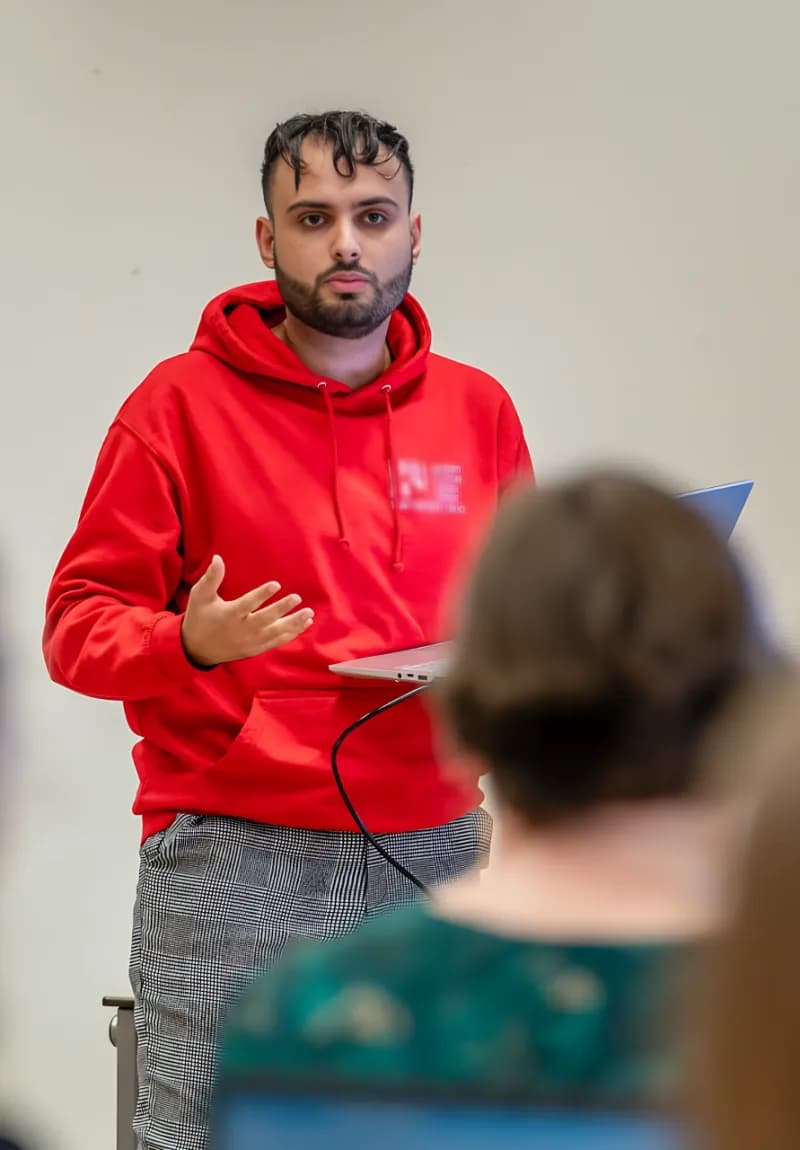
CodeSprinter's human-centred approach comes from both technical and academic experience. My academic background is in Human-Centered AI, which focuses on the collaboration between people and AI and the responsible design of AI systems. I also won a European audience award in the Responsible AI category.
That background shapes how I look at AI development: not just at what is possible, but also at what is usable, responsible and appropriate for the people who will be working with it.
You don't need to know yet which model or technique you need. Tell us which problem you want to solve, who will be using the software and what you want to achieve. Then together we'll look at whether AI fits and how we can apply it in a human-centred way.

CodeSprinter builds software for research and societal impact. From first idea to daily use.